
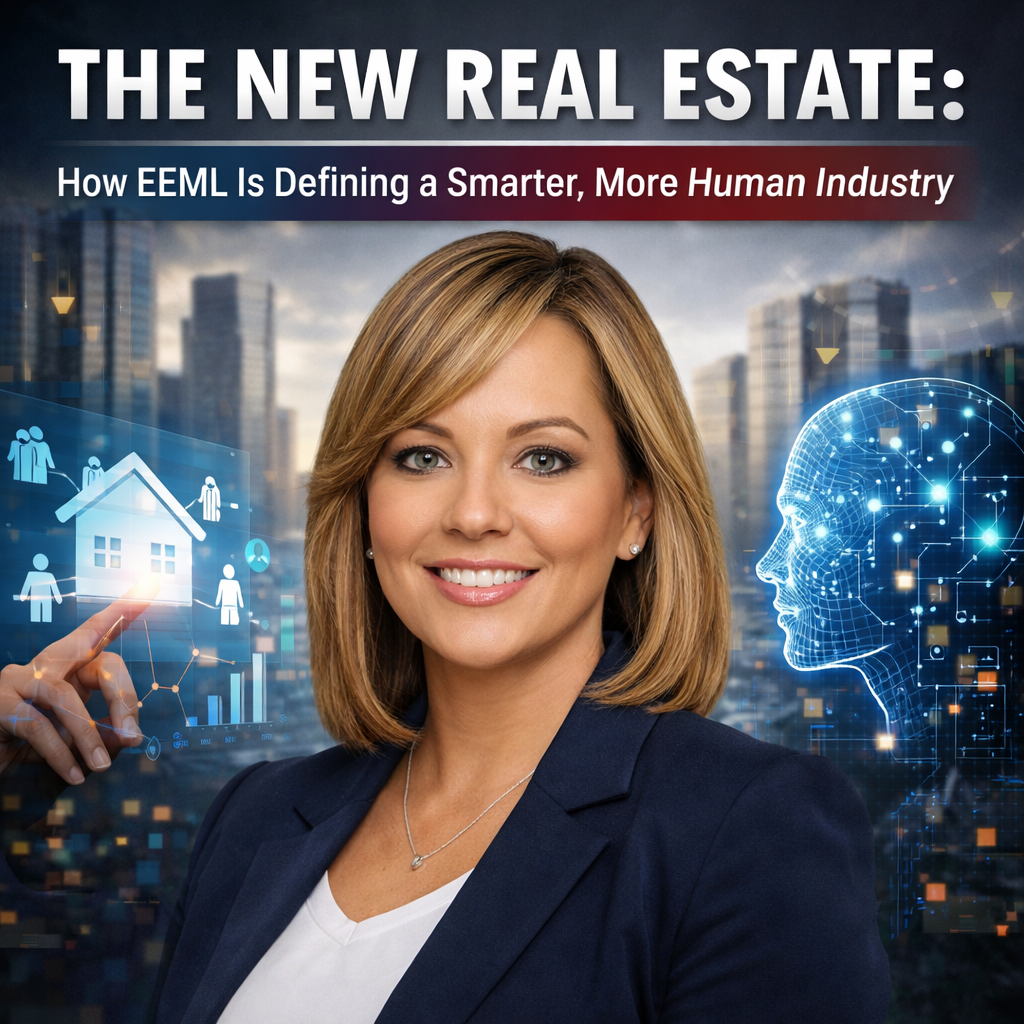
The real estate industry is undergoing a quiet but profound transformation. Transaction-driven models are giving way to advisory-led services, intuition is being replaced by data-informed judgment, and clients are demanding more than access—they want understanding. At the forefront of this shift is Esteem Estate Management Limited (EEML), an organisation shaping what many are beginning to recognise as The New Real Estate.
From Selling Property to Empowering Decisions
The New Real Estate is defined less by what is sold and more by how decisions are supported. EEML’s approach reframes the role of the agent from intermediary to advisor. Clients are guided through market realities, trade-offs, risks, and opportunities with clarity and structure. The outcome is not pressure-driven transactions, but confident, informed decision-making.
Professionalism as a System
Unlike legacy models that rely heavily on individual charisma or experience, EEML embeds professionalism into systems. Clear workflows, governed processes, and defined service standards ensure that quality is consistent—not dependent on chance. This systems-based approach reflects a broader industry evolution: professionalism must be repeatable to be trusted.
Emotion Recognised, Not Exploited
Property decisions are deeply emotional, yet the New Real Estate does not manipulate emotion—it manages it responsibly. EEML trains its professionals to recognise emotional drivers such as fear, aspiration, urgency, and hesitation, and to respond with empathy and clarity rather than pressure. This emotional intelligence reduces friction, builds trust, and accelerates alignment between clients and outcomes.
Technology as an Enabler of Trust
Technology within EEML is purposeful. CRM platforms, digital forms, analytics, and workflow tools are used to create transparency, traceability, and accountability. Rather than distancing professionals from clients, technology strengthens relationships by ensuring accuracy, follow-through, and visibility—core expectations of modern consumers.
Education as the Backbone of Change
The New Real Estate demands a new kind of professional. Through structured training and continuous development, EEML invests in education that prioritises judgment, ethics, and application over memorisation. This commitment ensures that agents are equipped not only to operate in today’s market, but to adapt as the market evolves.
A Blueprint for the Industry Ahead
As regulation tightens, clients become more informed, and markets grow increasingly competitive, the New Real Estate will favour organisations that combine human insight with disciplined systems. EEML’s model offers a clear blueprint: empower clients, professionalise service, and use technology to enhance—not replace—human judgment.
In redefining real estate as a profession grounded in trust, structure, and empowerment, EEML is not merely responding to change—it is helping to lead it.